10 Things to Expect from Hail No’s Hail-Mitigation Netting: Strength, Longevity & Smart Protection
Updated
December 3, 2025
•
5
min read
When dealerships evaluate hail-mitigation systems, the first question is always the same:
What should I expect from the netting itself?
It’s a fair question—after all, the netting is the heart of the hail protection system. At Hail No, our engineered netting is designed to withstand years of exposure, absorb the energy of severe hail, and safeguard millions of dollars in vehicle inventory. Here’s a clear, straightforward breakdown of what you can expect in terms of performance, durability, appearance, and maintenance.
1. Engineered for Impact Absorption—not Hail Elimination
Our netting is designed to absorb and disperse the kinetic energy of hail, not “stop” hail mid-air. The material flexes, stretches, and moves on impact, so your vehicles don’t have to.
You may still see hail sitting on top of the netting during a storm—that’s completely normal. What you won’t see? Hail dents, shattered windshields, or a service department gridlocked by repairs.
2. UV-Stabilized, Weather-Resistant Materials
Hail No uses high-tensile, UV-stabilized polymer fibers specifically formulated for outdoor exposure.
This means:
- No dry-rotting
- No brittle breakdown
- No color fading
- No loss of tensile strength from sun exposure
The material has proven its durability in some of the harshest climates in the U.S., from high-UV regions like Colorado and Texas to high-humidity coastal markets.
3. Designed to Move—Not to Fail
A common misconception is that “rigidity equals strength.” In hail protection, the opposite is true.
Our system is intentionally engineered with:
- Controlled flexibility
- Calculated sag and deflection
- Movement channels that let the netting work with the forces of the storm
This is how the system dissipates the potential impact energy of hail instead of transferring it into a vehicle's roof or hood.
4. Industry-Leading Tensile Strength
Our netting is designed for high tension, minimizing sag and ensuring proper load distribution. Combined with structural steel columns and engineered cabling, the system maintains integrity under heavy hail loads and high winds.
5. Scalable Coverage Options for Every Lot Layout
Whether a dealership needs 50 or 500 stalls covered, our netting system is modular and adaptable.
We adjust:
- Column spacing
- Net panel dimensions
- Cable layouts
- Perimeter anchoring
This flexibility allows us to maximize coverage while accommodating existing site constraints, such as light poles, utilities, and access drives.
6. Easy, Minimal Maintenance
One of the biggest advantages of Hail No’s system is the low maintenance burden:
- No annual re-tensioning
- No special cleaning required
- Simple storm inspections
- Built-in replaceability for individual panels if damaged
Most clients integrate net inspections into their normal facility walk-throughs.
7. Expected Lifespan
Our netting system is engineered for a 15–20+ year service life when properly tensioned and maintained. We stand behind that lifespan with detailed specifications, testing data, and installation quality controls.
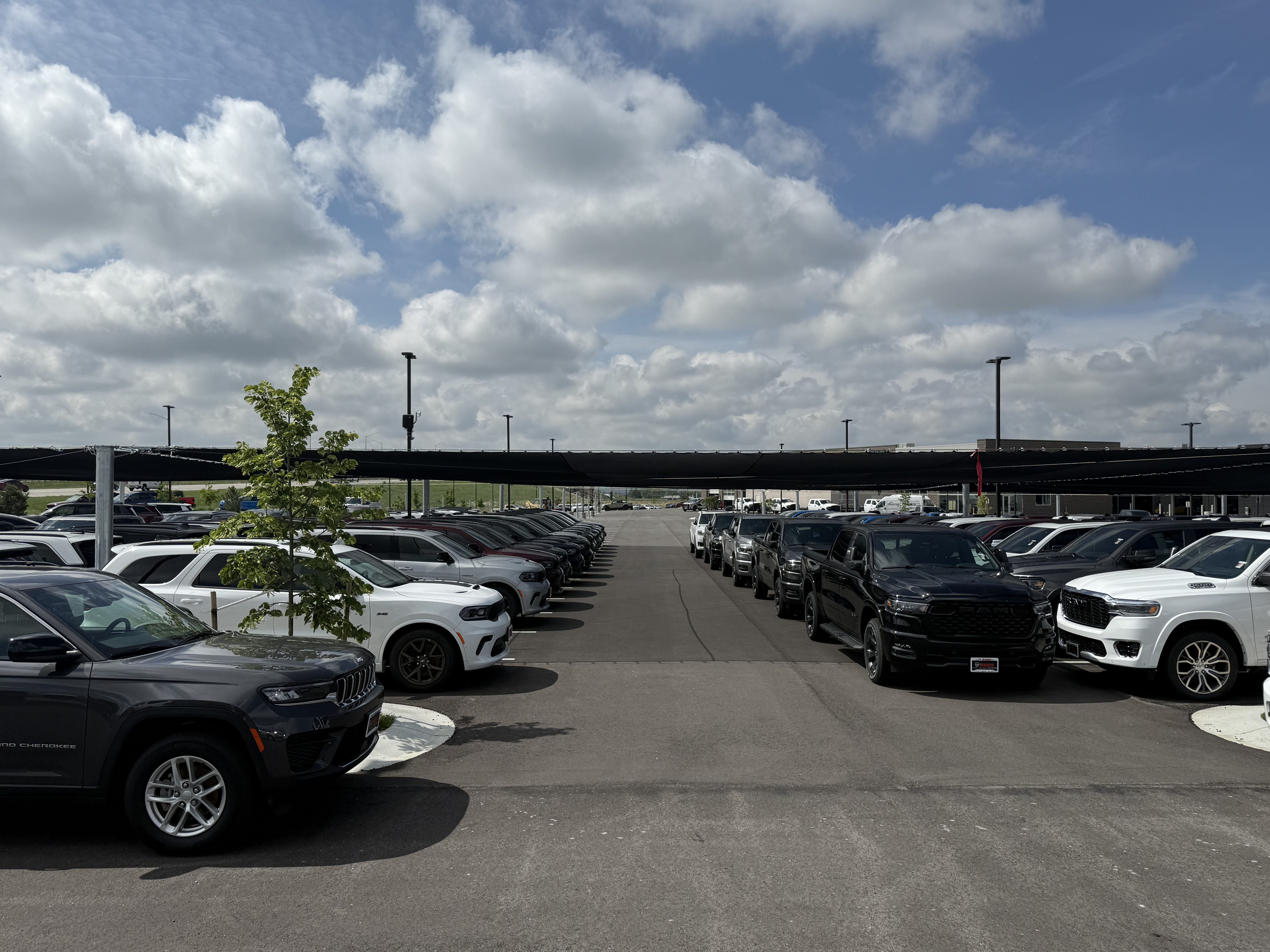
8. What It Looks Like Day to Day
Dealers always want to know how the netting will appear once installed. Here’s what to expect:
- A clean, uniform appearance
- Straight tension lines across each bay
- Even panel spacing
- Slight movement during wind events—that is intentional and normal
You can expect the netting to maintain a clean, uniform appearance, but some natural sagging is completely normal. The material expands in warm temperatures and contracts in cold ones, causing the netting to subtly adjust throughout the year. This temperature-driven movement is part of how the system is engineered to perform, and it does not impact protection, lifespan, or structural integrity. After storms and seasonal shifts, the panels return to their designed tension range.
The system is designed to be both functional and visually consistent with modern facility standards.
9. What It Looks Like During a Storm
During hail, you may notice:
- Hail bouncing, rolling, or collecting on top of the net
- Netting flexing under impact loads
- Temporary deflection at the center of spans
All of this is part of the engineered performance. After the storm, hail melts or harmlessly rolls off, and the netting returns to its resting tension.
10. Built for Insurance Peace of Mind
Hail No’s system is accepted by major insurance carriers and underwriters as a valid hail mitigation strategy because it demonstrates:
- Proven damage prevention
- Repeatable performance
- Engineered design and installation
- Reduced loss exposure
Many dealerships see premium reductions of 20–40% once the system is installed and certified.
Protection You Can Count On
The goal of our netting system is simple: protect your inventory, lower your risk, and eliminate operational disruption after a hailstorm. By understanding how the netting is designed and what to expect day-to-day and during a storm event, you can feel confident that your vehicles—and your bottom line—are protected.
Get hail netting's protection and insurance benefits.
Contact Hail No today for a customized hail protection plan.